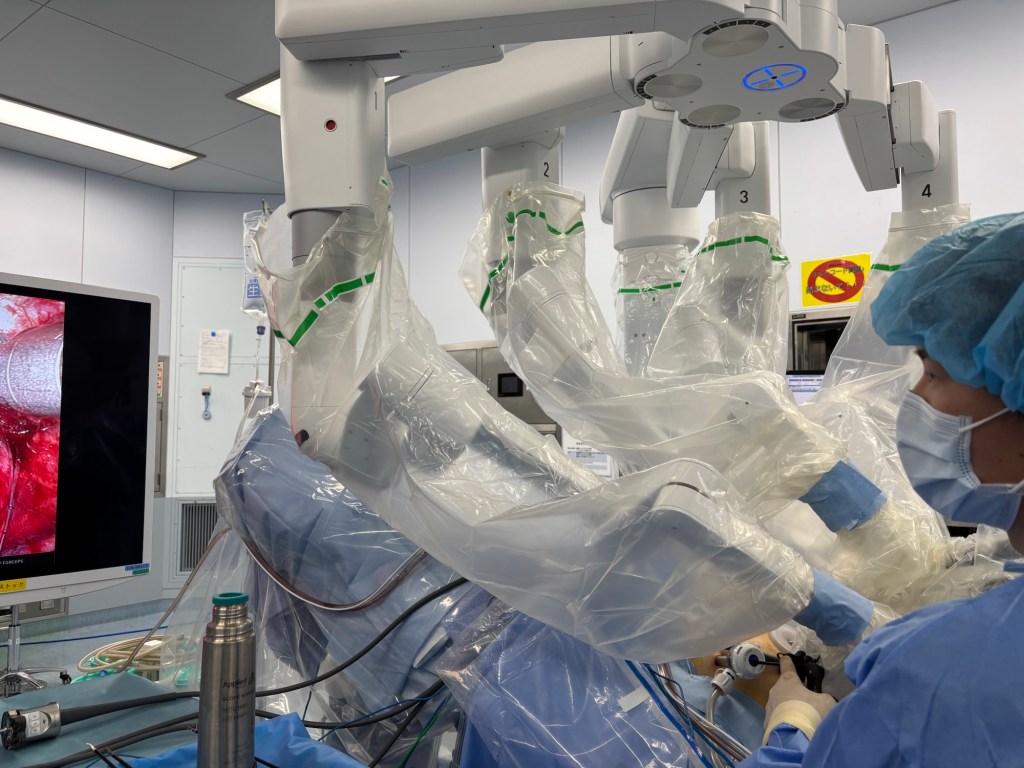
Saturday, February 15, 2025, marked our busiest surgical day yet!
A huge thank you to the anesthesiology team, nurses, co-medical staff, and ward team at Kameda General Hospital for their incredible support.
On this day, we performed three radical prostatectomies:
✅ Two nerve-sparing procedures – one using robotic surgery, the other with laparoscopy
✅ One non-nerve-sparing procedure – unfortunately, preservation was not possible
Nerve Preservation in Prostate Cancer Surgery
Whenever we perform radical prostatectomy, we always consider nerve preservation.
During surgery, we carefully observe:
🔹 The color difference between normal prostate tissue and cancerous tissue
🔹 The firmness of the tissue – infiltrated tissue tends to be harder than normal
🔹 The surgical margin – ensuring complete cancer removal while preserving function
While some cases are straightforward, in more advanced cases, distinguishing cancer from normal tissue becomes difficult. When that happens, the disease is often already in a progressed stage, meaning nerve preservation is no longer an option.
Why Is Nerve Preservation Important?
Most people associate nerve-sparing surgery with erectile function, but it also plays a crucial role in urinary continence.
The best nerve-sparing outcome is when post-surgery function remains unchanged from pre-surgery.
If recovery takes several months, it usually means the nerves sustained some level of damage and are slowly healing.
This is why precise surgical technique is critical—preserving nerve function from the start leads to the best possible recovery.
Surgical Precision Matters
Minimally invasive techniques, whether robotic or laparoscopic, allow for:
✅ Better visualization during surgery
✅ Careful tissue handling to reduce damage
✅ Improved functional outcomes for both erectile function and continence
By refining our techniques and advancing our understanding of nerve preservation, we continue to push for better outcomes for our patients.
 日本橋骨盤底診療所