A woman in her 30s had undergone several surgeries for an anal fissure.
Although the wound had healed completely, the pain around his anus persisted.
She mentioned that a sacral nerve block provided relief for about a week.
Wondering “why does the pain keep coming back?”, she came across our clinic’s blog and decided to visit.
We have seen many similar cases recently, and I feel it’s important to share what we’ve learned.
Anal Pain Is Transmitted by the Pudendal Nerve
The pudendal nerve is responsible for sensation in the anal area.
It originates from the sacral spinal roots S2–S4, travels through the pelvis via a tunnel called Alcock’s canal, and runs along the obturator internus muscle.
Along its path, it branches to control sensation and muscle function in the anus, urethra, clitoris (or penis), vagina, and perineum.
Why the Pain Persists Even When the Anus Looks Normal
When there is no visible inflammation or wound in the anus but pain continues, the reasons often lie in:
Myofascial compression or irritation along the course of the pudendal nerve Or nerve hypersensitivity or injury itself
In this patient’s case, there was marked tenderness in the right obturator internus and ischiocavernosus muscles.
After a myofascial release, the pain improved temporarily—suggesting that the source of pain was muscle and fascia tension rather than the nerve itself.
What Myofascial Release Reveals
When symptoms improve, even temporarily, after myofascial release, it usually indicates that the surrounding muscles and fascia are provoking the pain rather than the nerve alone.
Identifying the pain structurally is far more effective than continuing uncertain treatments based on vague diagnoses.
Treatment Approach
At our clinic, treatment begins with pelvic floor rehabilitation, and we gradually combine additional therapies depending on the response:
StarFormer® (high-intensity magnetic muscle stimulation) Hydro-release (targeted fascia injection) Low-intensity extracorporeal shockwave therapy (ESWT)
This stepwise approach helps restore healthy neuromuscular balance in the pelvic floor.
From “Removing Pain” to “Preventing Pain”
Of course, everyone wishes the pain could be gone immediately.
However, just as a shoulder massage gives only temporary relief, the pain will return unless posture, sitting habits, and muscle tension patterns are corrected.
“Vaginal stiffness” or “anal stiffness” often arise from prolonged sitting, poor posture, or emotional tension.
Learning how to maintain a relaxed, well-balanced body is the key to a pain-free life in the long term.
Key Takeaways
Most anal pain originates from the pudendal nerve Even when the anus itself is normal, muscle and fascia tension can cause pain Temporary improvement with myofascial release indicates the source Effective treatment combines rehabilitation, StarFormer, hydro-release, and shockwave therapy The goal is not only to relieve pain, but to build a body that doesn’t produce pain
Pelvic organ prolapse (POP) surgery is becoming more accessible than ever
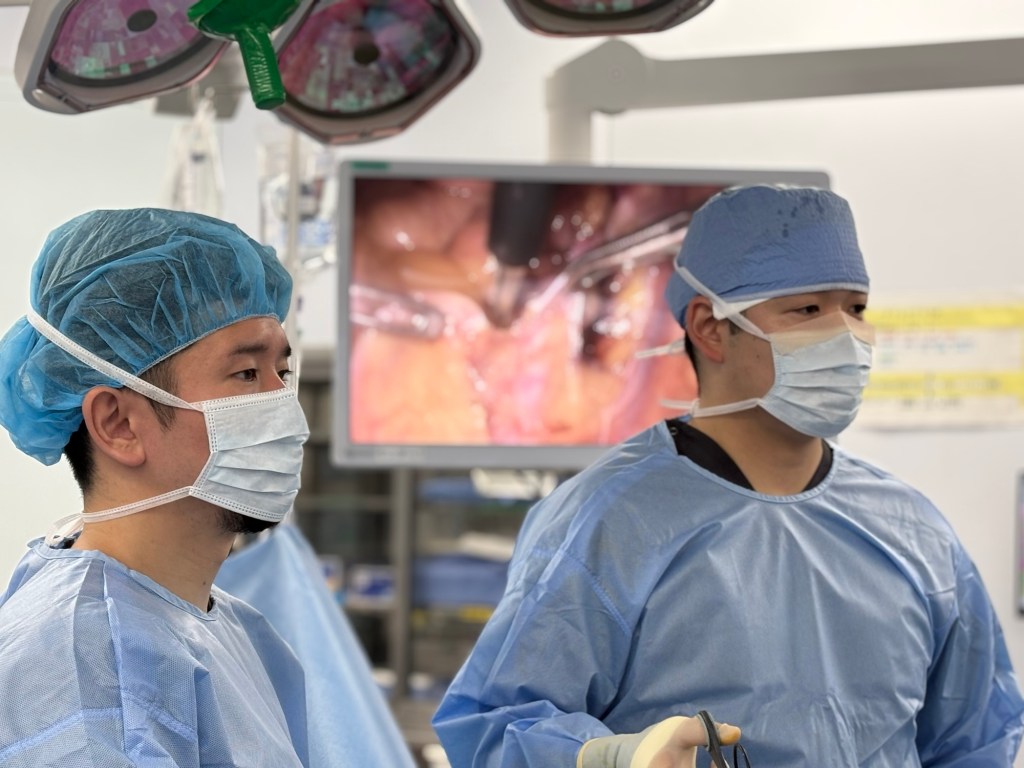
For a long time, laparoscopic sacrocolpopexy (LSC)—a commonly performed surgery for pelvic organ prolapse—required a hospital stay of about one week. This extended hospitalization was often a barrier for many women balancing busy lives and family responsibilities.
However, things are changing.
LSC in Just 2 Nights, 3 Days
Today, some medical institutions in Japan now offer LSC with a 2-night, 3-day hospital stay, thanks to medical advancements and streamlined surgical care.
Hospitals currently providing short-stay LSC include:
• Kameda Medical Center, Department of Female Urology
• Awa Regional Medical Center
• Yotsuya Medical Cube
Here’s what the typical schedule looks like:
• Kameda and Awa Center:
Day 1 – Admission
Day 2 – Surgery, Catheter removal
Day 3 – Discharge
• Yotsuya Medical Cube:
Day 1 – Admission & Surgery
Day 2 – Catheter removal
Day 3 – Discharge
Why Not Shorter, Like Day Surgery?
Technically, it is possible to do LSC as a 1-night or even same-day procedure.
However, due to the need for pre-op orientation, testing, nursing assessments, and administrative procedures, shorter hospital stays can be difficult to implement in large hospital systems.
Safer Anesthesia and Faster Recovery
The shift toward shorter stays has been driven by safer general anesthesia and the use of laparoscopic (minimally invasive) techniques.
For example, laparoscopic inguinal hernia surgeries are now often performed as outpatient procedures, with patients going home the same day.
LSC, being similar in nature, is also heading in this direction.
Moreover, many institutions are now introducing ERAS (Enhanced Recovery After Surgery) protocols, which focus on reducing post-operative discomfort and helping patients recover faster and more comfortably.
Could Same-Day LSC Be the Future?
With ongoing medical innovation and thoughtful perioperative management, same-day discharge after LSC may one day become a reality.
This is exciting news for women who may have postponed surgery due to time or scheduling concerns.
Bringing Surgery Closer to Everyday Life
The traditional view that “surgery means long hospital stays and a lot of hassle” is being rewritten.
Women juggling work, family, and personal time no longer need to give up on treatment for pelvic organ prolapse.
We’re entering a new era where surgery is more accessible, efficient, and patient-centered.
If you’ve been putting off care because “there’s just no time,” you might be surprised to find that treatment is now much more convenient.