Recently, we received a call from a patient who had undergone laparoscopic radical prostatectomy and had already been discharged. He reported being unable to urinate—a rare concern following this type of surgery. Fortunately, a local hospital in Shizuoka promptly placed a urinary catheter. Since then, his condition has improved, and after the catheter was removed yesterday, he has been urinating well with almost no leakage. We were relieved to hear that his recovery is progressing smoothly.
Now, you might be surprised to hear about urinary retention after prostate removal. In fact, it’s extremely uncommon. After radical prostatectomy, the more typical issue is urinary incontinence, not difficulty passing urine. Cases of immediate postoperative urinary retention are rare and only occasionally reported in the medical literature.
So, why does this happen?
In rare cases, urinary retention shortly after surgery may be caused by urethral edema (swelling), temporary narrowing at the bladder-urethral anastomosis, or a small hematoma (blood collection). In such situations, forcing urination is not advisable. Instead, the safest and most effective approach is to reinsert a urinary catheter and wait for the inflammation and swelling to subside naturally.
According to the literature, conservative management with catheter reinsertion is the standard of care for such cases (Tewari et al., 2007; Campbell-Walsh Urology, 11th edition).
It’s also worth noting that postoperative symptoms such as urinary leakage or difficulty urinating are typically temporary and improve over time. In this case, the patient regained stable urination early on and had minimal leakage, making this a particularly favorable outcome.
This experience reminded us once again that successful surgery is not just about removing disease—it’s also about supporting patients through recovery and maintaining their quality of life (QOL) by addressing even the smallest postoperative issues with care and attention.
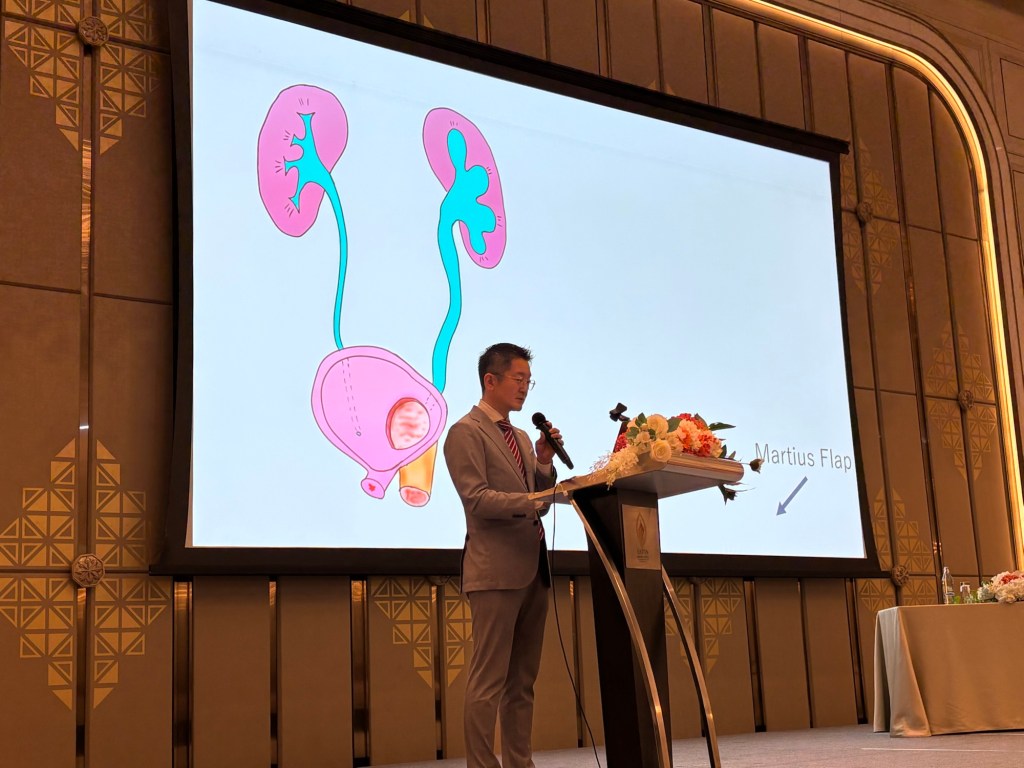
Today in our outpatient clinic, we saw two women who had previously undergone successful surgical repair of vesicovaginal fistula (VVF). Both of them had something in common: it took years—literally years—for them to receive a proper diagnosis.
One was in her 40s, the other in her 60s. In both cases, the condition developed following surgery for uterine fibroids—specifically, a hysterectomy. Some time after their procedures, they began to notice a persistent watery discharge from the vagina.
Unfortunately, this was initially dismissed as a normal postoperative symptom. They were told, “It’s probably nothing,” or “Let’s just wait and see.” Even when they visited gynecologists or urologists, no clear diagnosis was made. And so, they continued to suffer in silence for years—dealing with discomfort, embarrassment, and a loss of control over their own bodies.
Vesicovaginal fistula is a condition in which an abnormal passage forms between the bladder and the vagina, allowing urine to continuously leak through the vaginal canal. Patients often experience constant wetness, a need for pads, odor, discomfort—and above all, the psychological toll of losing control over such a basic bodily function. It profoundly impacts quality of life.
Today, both of these patients had the same message: their urinary leakage had completely stopped after surgery, and they were finally able to live a “normal” life again. One of them said with a bright smile,
“I never thought a day like this would come—where I could just live normally again.”
Those words—and the relief in her voice—left a lasting impression on us.
It also made us reflect: perhaps what’s truly remarkable is the human ability to adapt. These patients had spent years living with what wasn’t normal—but managed to survive until they could be helped.
Although VVF is a relatively rare condition, it is one that can be cured when properly diagnosed and treated with appropriate surgery. However, because it is unfamiliar to many clinicians—and often misunderstood or ignored by patients themselves—diagnosis can be delayed.
Many people think, “Maybe this is just something I have to live with,” or “It’s too embarrassing to talk about.”
That’s why we are committed to listening closely—to the spoken concerns, and especially the unspoken ones.
We want to reduce the number of people suffering in silence, and provide the kind of careful, compassionate care that every person deserves.